Film's catalog

Loading...
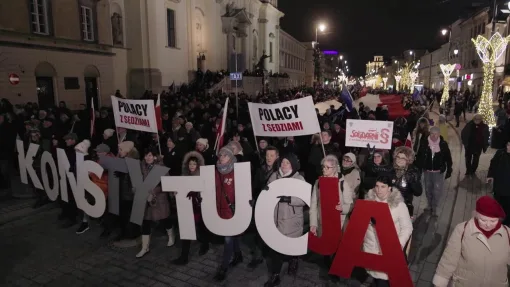
Since 2015, the Polish government has been attacking one of the three pillars of democracy: the judiciary. However, some judges do not want to give up their independence.
For years the European Union has been sharply criticising the long-standing pressure on the courts in Poland, where judicial reform is aiming to bring the courts under government control. Judges who do not submit to the government are portrayed as arrogant elitists or even enemies of Poland, and face bullying in the form of threats and disciplinary proceedings. Still, many Polish judges refuse to give up, continue to defend the independence of the law and try to activate the public and their European colleagues through demonstrations and debates. One of the main faces of the protest movement is Judge Igor Tuleya, who brings a touch of dark humour to the difficult situation. But how long can he and his colleagues resist the pressure?